Security in small businesses is not a luxury, but a necessity. Although the risks may seem lower than in large companies, any incident - from a fire to a robbery - can have serious consequences for your business, employees, and customers.
That's why having an emergency plan for small businesses is essential. In this article, you'll discover how to prepare, prevent risks, and leverage intelligent access control technology to increase the security of your premises.
Identify the Risks of Your Business: Knowledge is Prevention
Each business has different vulnerabilities. Before creating your emergency plan, it's crucial to identify specific risks:
- Fires: electrical failures, kitchens, or flammable materials.
- Theft or intrusions: poorly controlled access or high-traffic areas.
- Medical emergencies: employee or customer accidents.
- Natural disasters: floods, storms, or earthquakes depending on your region.
Design Clear Evacuation Protocols
Having a plan is not enough: everyone must know how to act. Define clear evacuation protocols that include:
- Visible and accessible emergency exit signage.
- Safe meeting points outside the premises.
- Lists of local emergency contacts (fire department, police, medical services).
- Specific procedures according to the type of emergency.
Simulating these situations with staff through regular drills increases safety and reduces the risk of panic during a real incident.
Preventive Measures: Protect Before It Happens
Prevention is more effective than reaction. Some essential measures include:
- Fire extinguishers and smoke detectors in good condition.
- Periodic review of electrical and gas installations.
- Training in first aid for employees.
- Physical security of the premises: reinforced doors, bars, cameras, and alarms.
These actions not only protect lives but also reduce material losses and generate confidence in customers and employees.
How Intelligent Access Control Systems Improve Security
Technology is a key ally for prevention. An intelligent access control system allows:
- Lock or unlock accesses remotely via mobile applications.
- Record entries and exits automatically, useful in audits or incidents.
- Manage temporary or code-based access, ideal for suppliers or external personnel.
- Integrate alarms and sensors for a quick response to fires or intrusions.
Integrating these systems into your emergency plan strengthens security and facilitates incident management.
Train Your Staff: Everyone Is Responsible
An emergency plan only works if everyone knows what to do. Continuous training should include:
- Periodic evacuation drills.
- Use of fire extinguishers and first aid kits.
- Internal and external communication protocols during emergencies.
- Safety culture: each employee becomes a protector of the premises.
Training reduces risks and ensures everyone acts quickly and in coordination.
Document and Keep Your Emergency Plan Updated
Your plan should be a living document, reviewed regularly:
- Changes in infrastructure or personnel.
- Update of local security regulations.
- Incorporation of new technologies or preventive measures.
An updated plan ensures that your business is always prepared for any eventuality.
Downloadable Checklist: Your Step-by-Step Guide
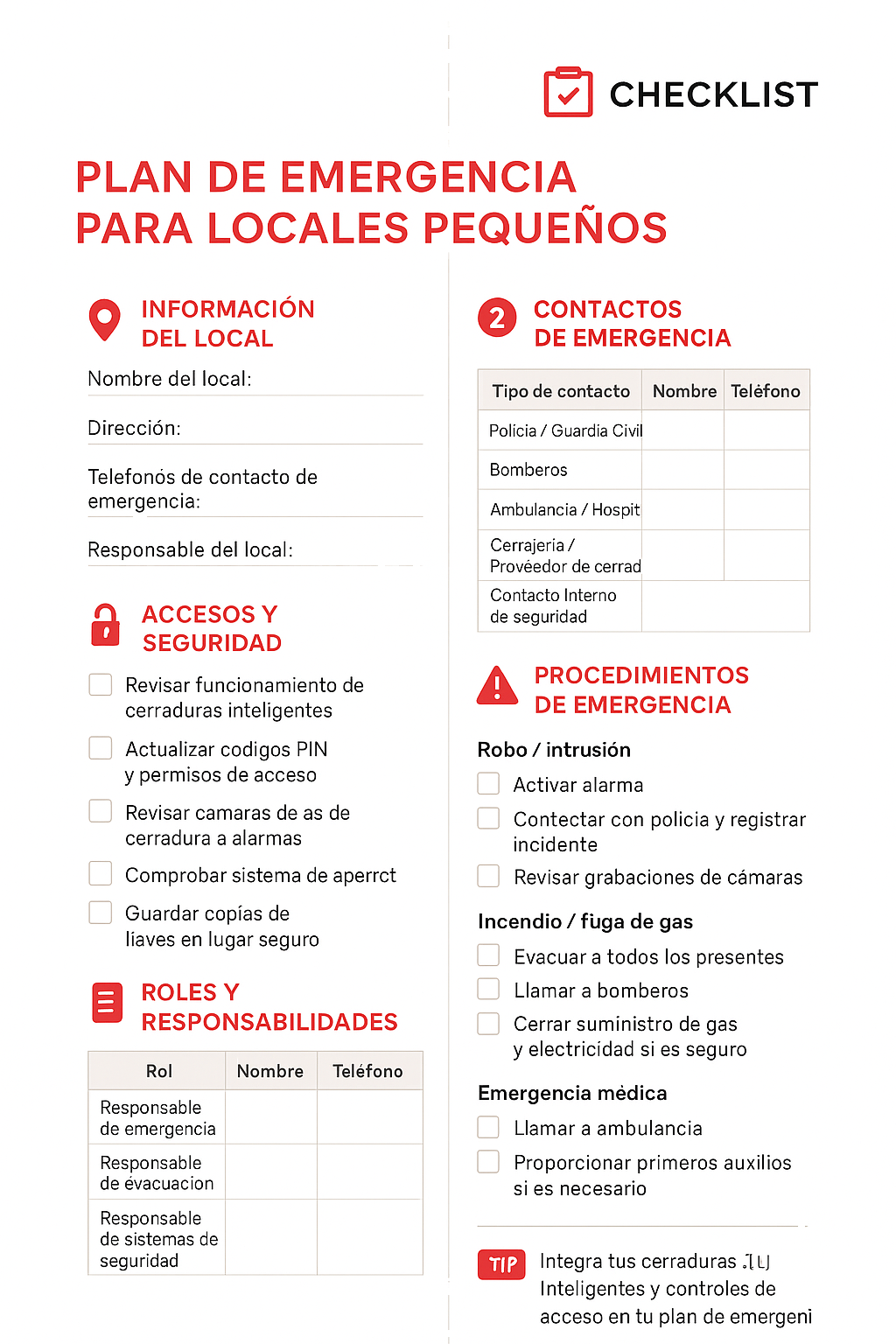
To facilitate implementation, a downloadable checklist like “Emergency Plan for Small Businesses” is ideal. With it, you can:
- Review the security of your premises step by step.
- Ensure that all protocols are followed.
- Maintain a record of periodic reviews.
- Easily integrate intelligent access control solutions.
This practical resource saves time and guides owners in creating a safe and prepared premises.
Benefits of Having a Prepared Premises
Having a comprehensive plan and security technology offers multiple advantages:
- Protection of lives and property against fires, theft, or accidents.
- Reduction of economic losses due to material damage or business interruptions.
- Compliance with local regulations, avoiding penalties.
- Greater confidence among customers and employees, improving reputation.
- Efficient emergency management, thanks to intelligent access systems and automatic alerts.
The combination of prevention, training, and technology turns any small premises into a safe and resilient space.
Security is not optional: it is an investment that protects lives, assets, and reputation. A well-designed emergency plan, complemented by preventive measures and intelligent access control, ensures that your premises can react effectively to any incident.
Download our free checklist 'Emergency Plan for Small Businesses'